
Skyline Renewable Energy — Life Critical Policy
Line Breaking
Policy Summary
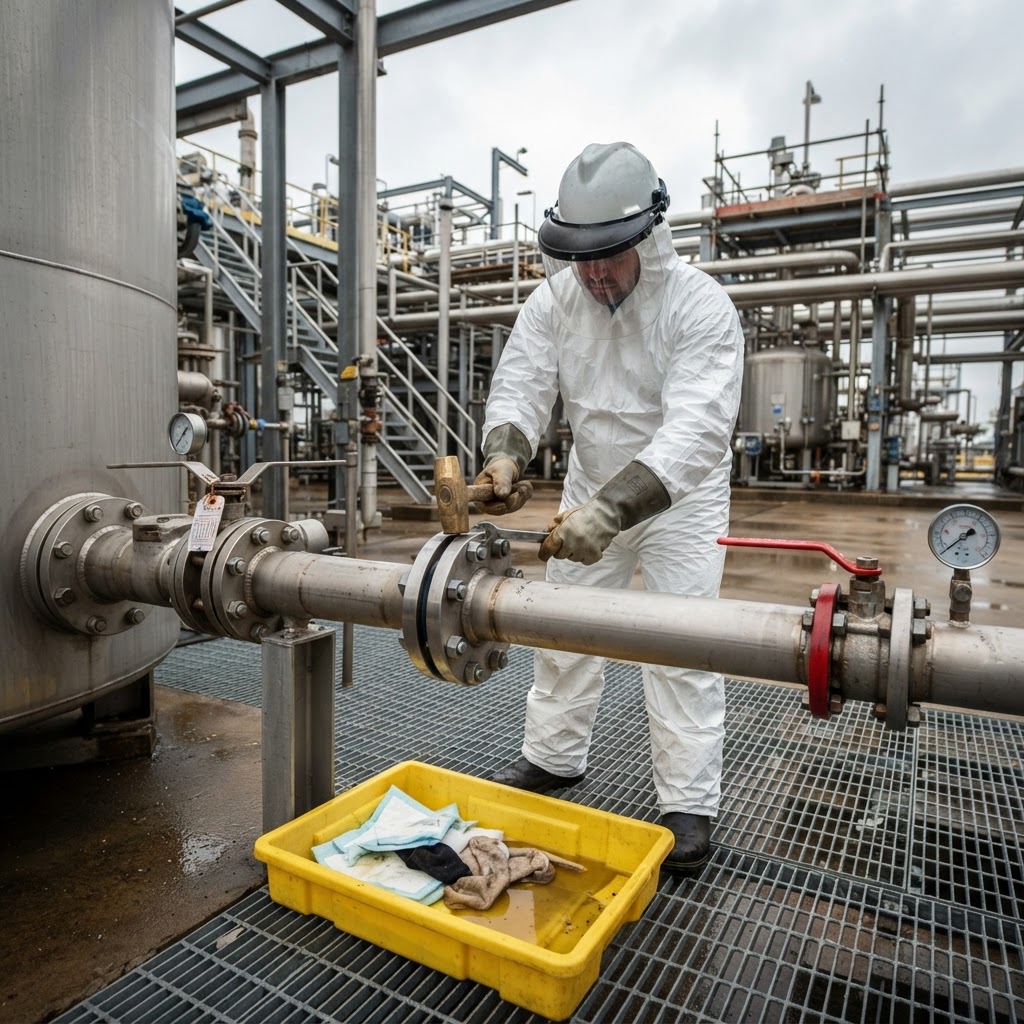
Opening a line that carried fuel, vapour, chemical or steam is one of the highest-risk tasks on site. No line is broken until it is isolated, drained, depressurized, purged and verified, under a line breaking permit.
Policy Topics
Plan Before You Open Any Line
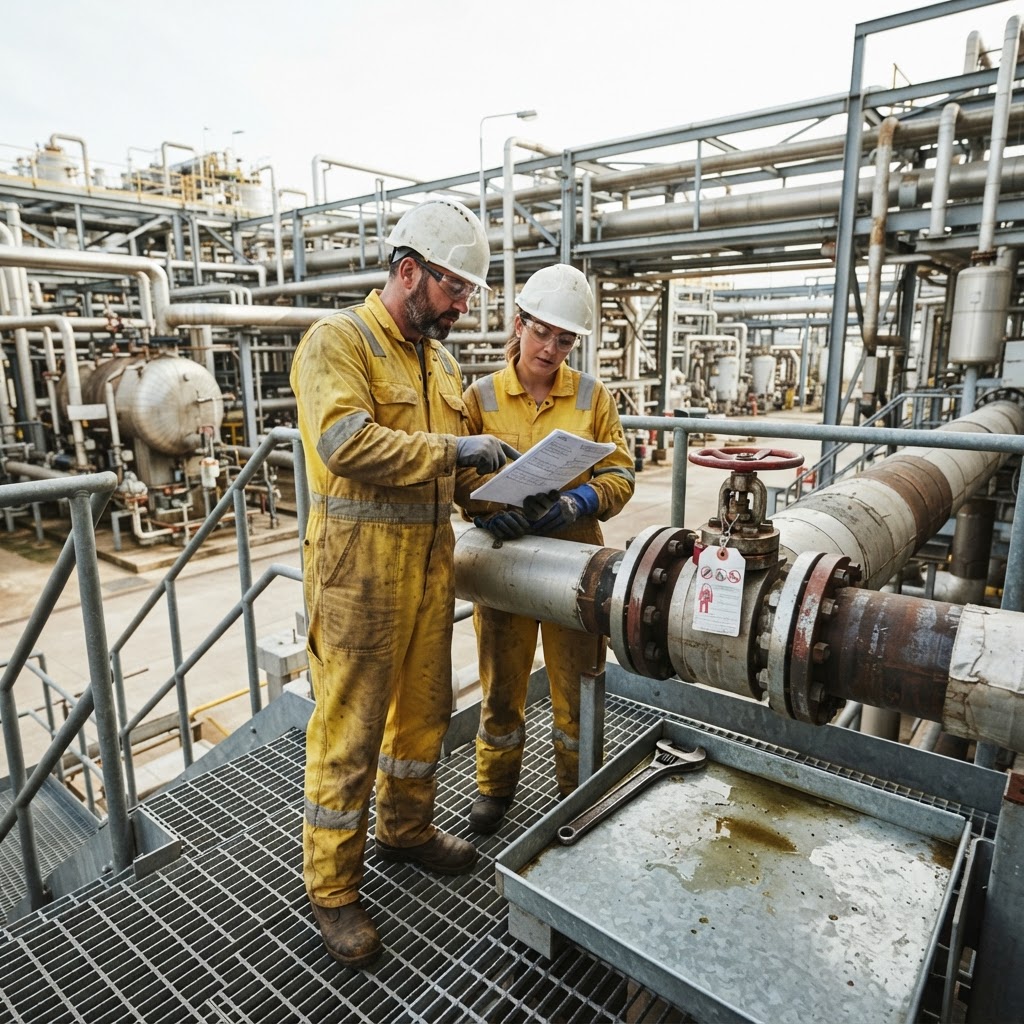
A line break is planned, permitted and prepared — never improvised.
A line breaking permit issued for the specific line and task.
Confirm the product, its hazards and the last known condition of the line.
Identify both sides of the break point and every connected system.
Define the drain or receptor for any residual product.
Brief the crew on the sequence and what to do if product appears.
Isolation and Zero Energy
Closing a valve is not isolation.
- Isolate by blind, spade, physical disconnection or double block and bleed as the permit requires.
- Apply lockout and tagout to isolation points.
- Depressurize and verify zero pressure at the break point with a gauge and a vent.
- Confirm zero flow and account for trapped liquid in low points.
- Never rely on a single valve between you and the product.
Drain, Flush and Purge
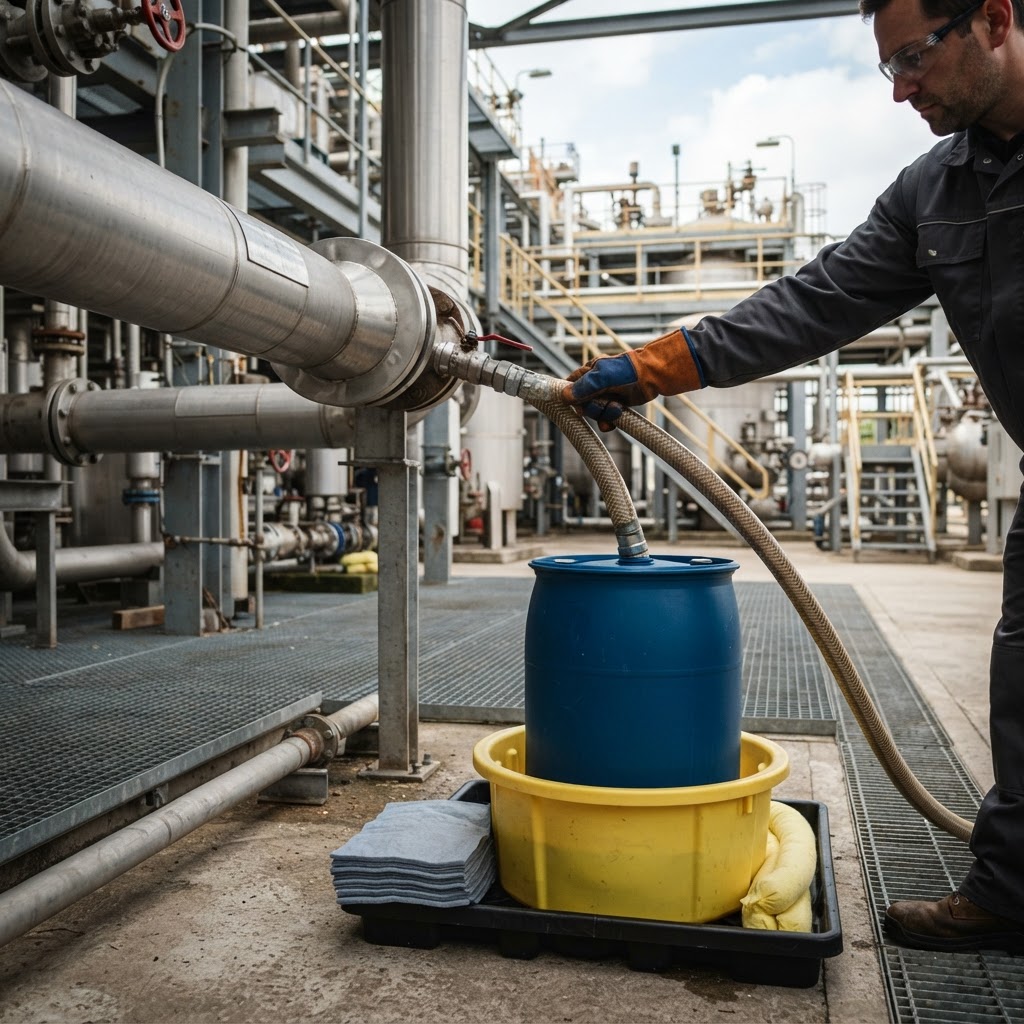
Residual product is the reason line breaks go wrong.
- Drain to a controlled receptor — never to the ground or a storm drain.
- Water flush, steam or inert gas purge where the product or permit requires it.
- Confirm the line is free of residual product before opening the flange.
- Crack the joint slowly and on the far side from your body, and expect product.
- Keep the line open only as long as the work requires, and never leave it open unattended.
PPE, Monitoring and Spill Readiness
Prepare for the release you are trying to prevent.
- Wear chemical protective gloves, face shield and splash protection matched to the product.
- Monitor for flammable or toxic atmosphere in the work area throughout the task.
- Stage a spill kit, absorbent and firefighting equipment before the flange is broken.
- Control ignition sources and stop other transfers nearby.
- Never break a line alone, and stop work if conditions, pressure or monitoring change.
Demonstrate Your Understanding
Complete the compliance quiz to confirm your understanding of this life critical policy.