
Skyline Renewable Energy — Life Critical Policy
Fall Protection – Working from Heights
Policy Summary
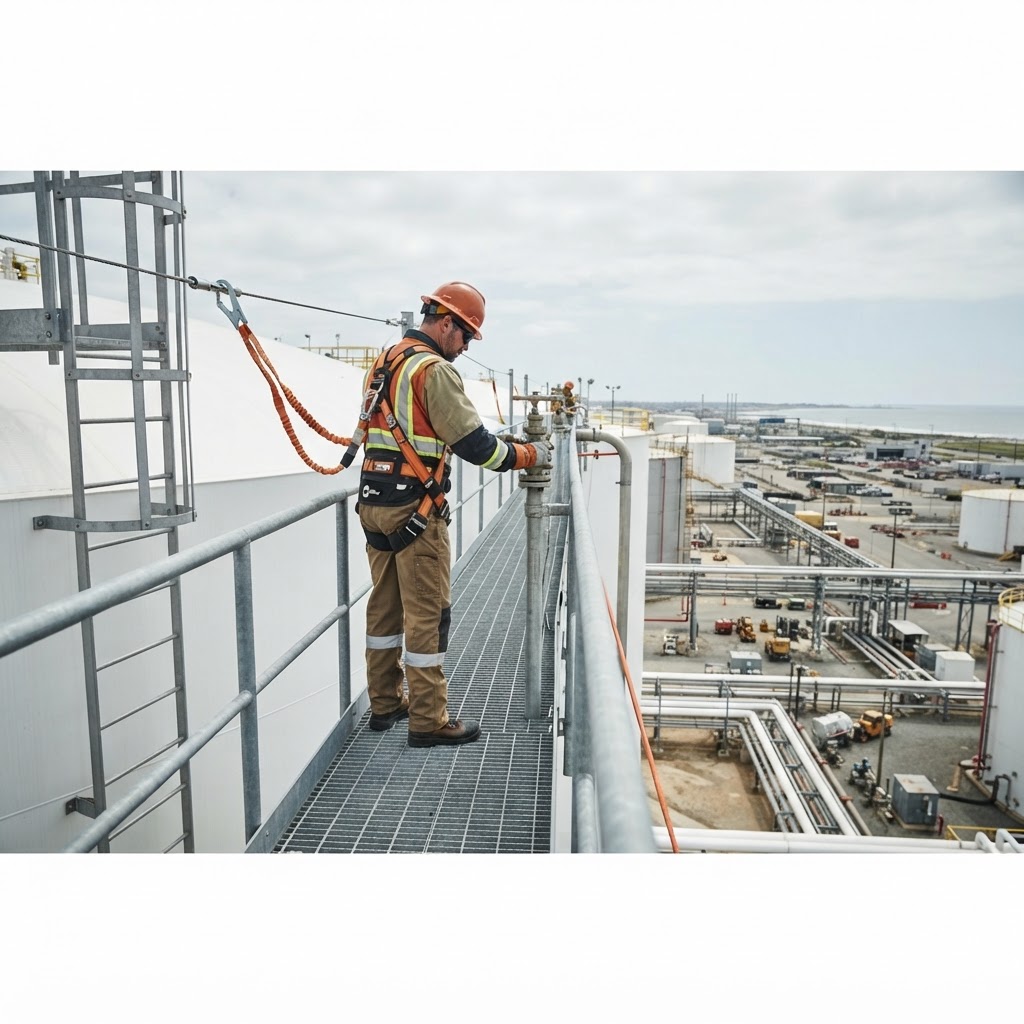
Any work at height or near an unprotected edge requires fall protection before the task begins. Falls from ladders, catwalks and tank tops remain the leading cause of fatal injury in terminal operations.
Policy Topics
When Fall Protection Is Required
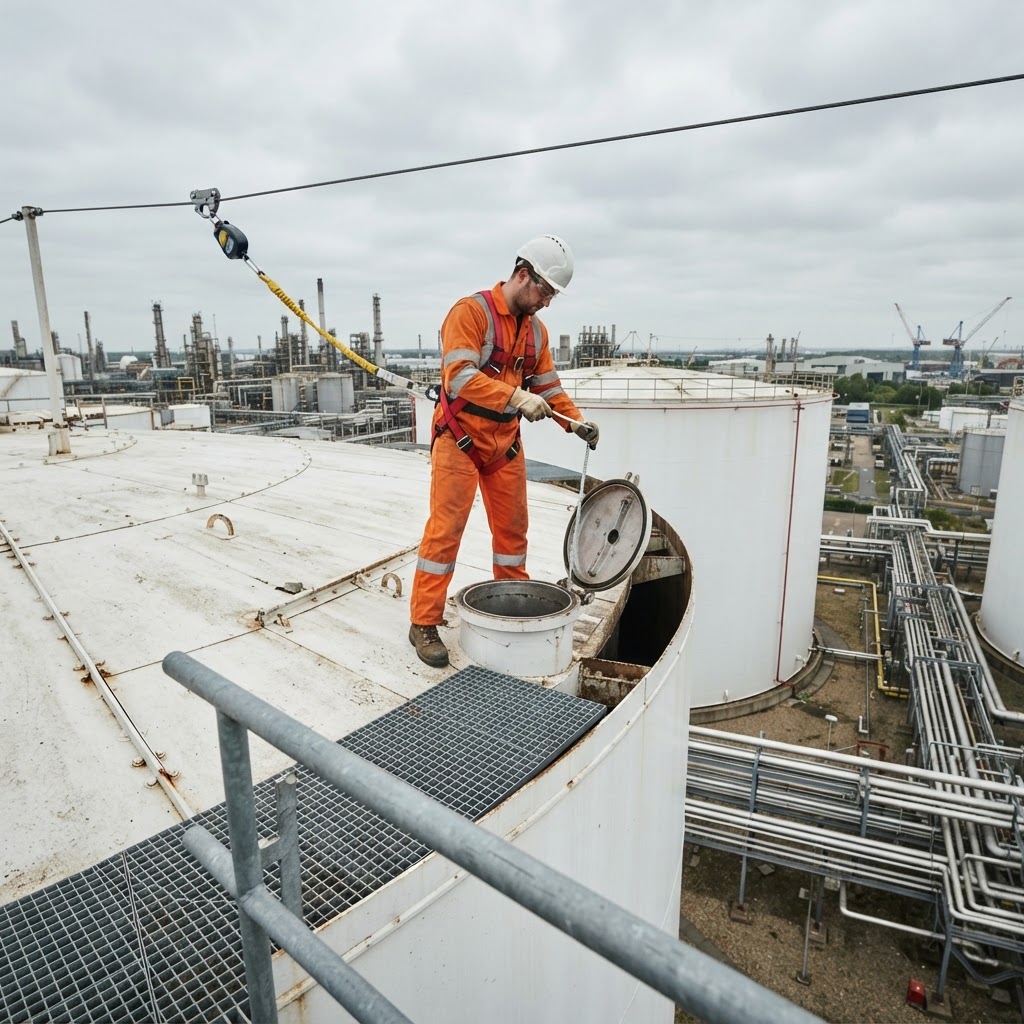
Fall protection is required every time, with no exception for short tasks.
- Work 4 feet or more above a lower level in general industry, or 6 feet in construction.
- Any work near an unprotected edge, opening, tank hatch or excavation.
- Climbing ladders or stairs onto tank tops, truck racks, loading arms or rack platforms.
- Reaching over an edge or handrail to access a fitting, gauge or valve.
If the task cannot be done with both feet on a protected surface, it needs fall protection.
Hierarchy of Controls
Engineered protection first, personal equipment last.
Eliminate the need to work at height where the task allows.
Guardrails, covers and barriers on every opening and edge.
Restraint systems that physically prevent reaching the edge.
Fall arrest — full body harness, self-retracting lanyard, rated anchor point.
Positioning and fall arrest equipment is the final layer of protection, never the first choice.
Equipment Inspection and Anchors
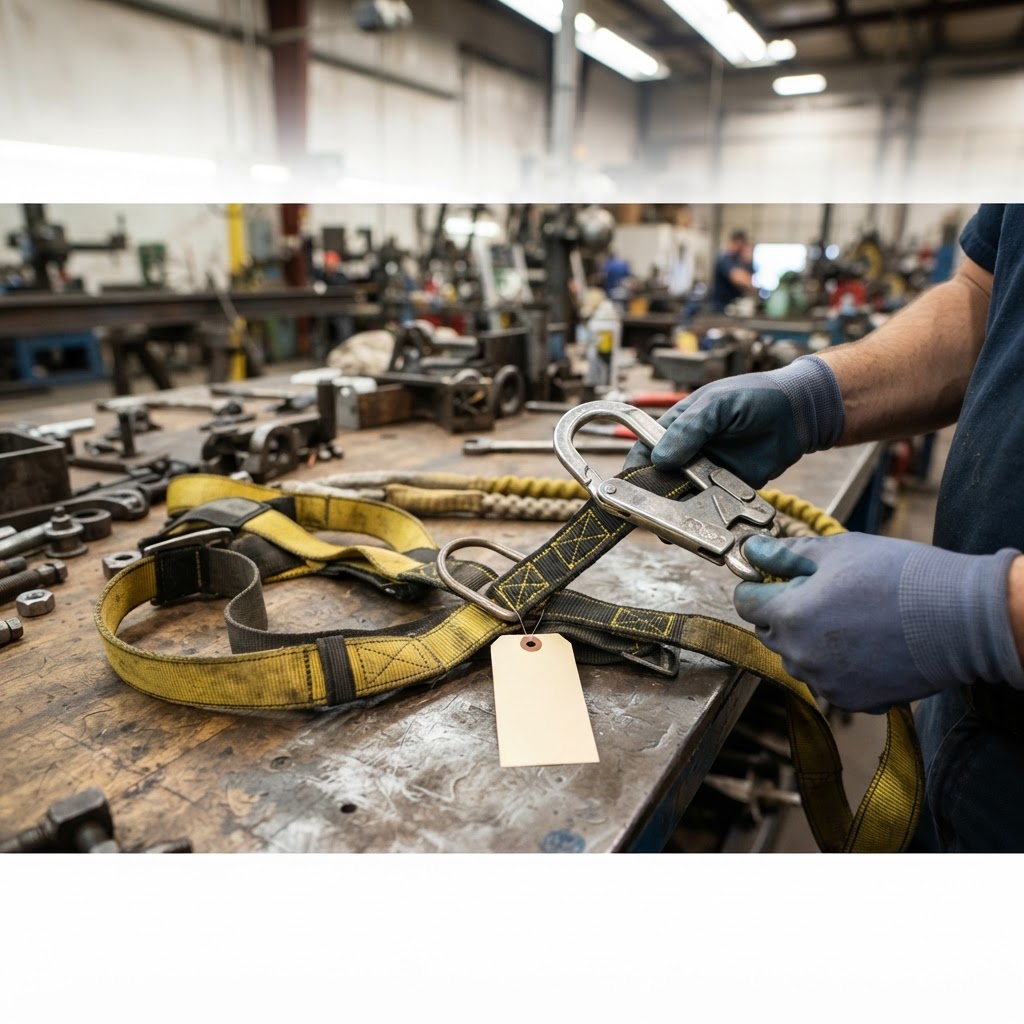
A harness is only as good as its weakest part.
- Inspect harness, lanyard, carabiner and anchor before every use — cuts, fraying, corrosion, cracked hardware and expired tags all mean removal from service.
- Anchor at or above shoulder level to a rated point of at least 5,000 lb per person.
- Never anchor to handrail, pipework, valves or process equipment.
- Calculate fall clearance — lanyard length, deceleration and worker height all add distance.
- Any component involved in a fall is removed from service immediately.
Rescue and Safe Access
An arrested fall can still be fatal within minutes.
- A rescue plan and trained rescuers are in place before anyone works at height.
- Never work at height alone.
- Use a ladder or elevating work platform with three points of contact — never a drum, crate or forklift tine.
- Maintain 100% tie-off when transferring between anchor points where required.
- Keep a fallen worker still and call for help — suspension trauma develops rapidly.
Demonstrate Your Understanding
Complete the compliance quiz to confirm your understanding of this life critical policy.